






Commercial waste contracts for Hammersmith shops and offices
Posted on 08/07/2026
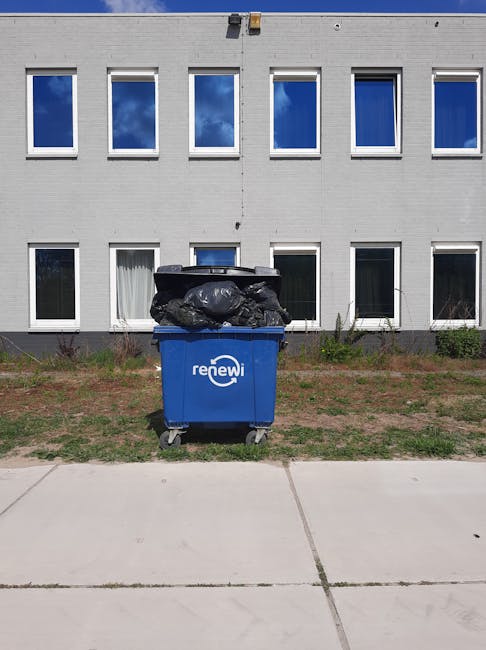
If you run a shop on King Street, manage a cafe near Hammersmith Broadway, or oversee an office that seems to produce paperwork, packaging, and random broken bits every other day, waste can quietly become one of those boring-but-costly problems. Commercial waste contracts for Hammersmith shops and offices are meant to stop that drift. Done well, they keep your premises tidy, your staff happier, and your waste handling far less stressful. Done badly, they create missed collections, surprise charges, and the sort of bin-area mess that always seems to appear on the busiest morning of the week.
This guide breaks the topic down in plain English. You'll see how commercial waste contracts work, what to compare, what to avoid, and how Hammersmith businesses can choose a setup that feels practical rather than painful. And yes, we'll keep it grounded. No fluff, no sales-speak. Just the useful stuff.
- Why this matters for local businesses
- How commercial waste contracts work
- Key benefits and practical advantages
- Who needs a contract and when it makes sense
- Step-by-step guidance
- Expert tips for better results
- Common mistakes to avoid
- Tools, resources and recommendations
- Law, compliance, standards and best practice
- Options and comparison
- Case study example
- Practical checklist
- Conclusion
- Frequently asked questions
Why Commercial waste contracts for Hammersmith shops and offices Matters
Waste removal is one of those things people only notice when it goes wrong. A late collection, an overflowing rear yard, or a bin that smells a bit too ambitious in summer can affect customers, staff morale, and even neighbouring tenants. In busy parts of Hammersmith, where retail, hospitality, and office life often overlap, that matters more than most owners expect.
A proper commercial waste arrangement gives you structure. It sets out what gets collected, how often, where it goes, and what happens if volumes change. That sounds dull, but it is exactly what keeps a business running smoothly. You are not just paying for someone to take things away; you are buying predictability.
There is also a reputational side to this. A clean frontage tells people you are organised. A cluttered loading area tells a different story. Let's face it, customers notice. Staff do too. And if your waste is handled inconsistently, you can quickly end up managing problems that should never have reached your desk in the first place.
For many Hammersmith businesses, the right setup also reduces the temptation to treat commercial waste like domestic rubbish. That shortcut can lead to confusion, disputes with landlords, or avoidable penalties. If you want to understand how waste issues can affect local businesses more broadly, the article on why Hammersmith and Fulham council fines affect waste is a useful companion read.
How Commercial waste contracts for Hammersmith shops and offices Works
At a basic level, a commercial waste contract is an agreement between a business and a waste carrier for regular or scheduled collection of business waste. That may include general rubbish, cardboard, office waste, packaging, mixed recyclables, and sometimes specialist streams depending on the provider and the premises.
The contract usually defines three practical things:
- What you throw away - the waste types covered.
- How often it is collected - daily, weekly, fortnightly, or ad hoc.
- What it costs - often based on bin size, weight, frequency, or uplift type.
That is the broad picture. In real life, the working part matters more. You need to know where bins are stored, who presents them, whether access is easy on collection day, and what happens when trading hours make things awkward. Shops often have tighter frontage constraints, while offices may need discreet internal handling to avoid disruption. Different premises, different headaches.
Some contracts are straightforward and fixed. Others are more flexible, which can be helpful for a business with seasonal spikes. A boutique near the Tube might need extra cardboard collections during busy periods. An office clearing out old furniture during a move will need a different setup altogether, perhaps closer to a one-off clearance arrangement than a standard scheduled bin service. If that sounds familiar, the service page for office clearance in Hammersmith may be relevant when you are dealing with a reset rather than an ongoing contract.
One small but important point: commercial waste and household waste are not interchangeable. It is a common mistake to assume a commercial premise can just piggyback on whatever feels simplest. It rarely ends well.
Key Benefits and Practical Advantages
A good contract is not just about compliance. It can make the everyday running of a business easier in ways that are easy to underestimate.
- Cleaner premises: waste moves out before it becomes a visible problem.
- Better use of time: staff spend less time improvising with bins, bags, and loading areas.
- More predictable costs: regular service planning is usually easier to budget for than repeated emergency collections.
- Reduced disruption: collections can be matched to opening hours, deliveries, or quieter office periods.
- Improved recycling behaviour: when bins are labelled and collections are clear, sorting tends to improve.
- Less risk of overflow: which is particularly helpful in dense commercial streets where space is at a premium.
The real advantage, though, is control. If you know what is collected, when it leaves, and who is responsible, you can stop waste from becoming a background hassle. That is a win for operations and for peace of mind. Quietly important, that one.
There can also be a cost-control benefit if your contract is matched properly to your actual waste volume. For example, an office that has moved more work online may need less general waste collection than it did two years ago. A shop with a heavy packaging load may need the reverse. The best contract is the one that reflects how you operate now, not how you operated when the paperwork was first signed.
Who This Is For and When It Makes Sense
Not every business needs the same kind of arrangement. Commercial waste contracts are most useful when your waste output is regular, your premises have limited storage space, or your team cannot afford uncertainty around collections.
This usually includes:
- retail shops with daily packaging and mixed waste
- offices with paper, cardboard, catering waste, and old equipment
- hospitality venues with steady back-of-house waste
- salons, clinics, studios, and customer-facing premises that need to stay tidy
- businesses in shared buildings where bin access is controlled
It also makes sense if you are growing. A tiny office may start with one small bin and a fortnightly collection. Then the team grows, deliveries increase, and suddenly the old setup is nowhere near enough. That's a pretty normal pattern, by the way. Waste always seems to grow in step with success, which feels a bit rude if you ask me.
For businesses planning a move or refurbishment, the contract question becomes broader. You might need temporary extra capacity, clearance support, or a one-off removal before settling into a steady arrangement. In those situations, related services such as waste clearance in Hammersmith can help bridge the gap between a big tidy-up and normal day-to-day operations.
If you are unsure whether you need a recurring contract or a one-off uplift model, ask yourself a simple question: is your waste predictable enough that a scheduled service will save time and money? If yes, the contract route is usually worth serious attention.
Step-by-Step Guidance
Here is a practical way to approach commercial waste contracts without getting overwhelmed by jargon or sales chatter.
- Audit your waste
Spend a week or two looking at what actually goes into the bins. Cardboard, food waste, office paper, broken fittings, packaging film, and general rubbish all behave differently. The goal is not perfection; it is visibility. - Measure the volume honestly
Overestimating is expensive. Underestimating leads to overflows. Count bins, note uplift frequency, and think about peak periods rather than just quiet weeks. - Separate waste streams where possible
Recycling, general waste, and bulky items should not all be treated as the same thing. Even basic separation can improve efficiency and reduce friction. - Check access and storage
Can a collection vehicle reach the site easily? Are bins stored safely? Is there a narrow alley, basement access, or shared yard to factor in? The practical details are where many contracts succeed or fail. - Ask how changes are handled
What if your waste volume jumps during a busy season or drops after a fit-out? Flexible contracts are often more useful than rigid ones, especially in London where businesses shift faster than people expect. - Compare what is included
Some contracts bundle bin rental, scheduled uplifts, and reporting. Others keep pricing lean but charge separately for extras. Read the detail. It matters. - Confirm paperwork and responsibilities
Make sure you know who is responsible for presenting bins, signing off collections, and handling any issues. Small admin gaps can become large annoyances.
A useful habit is to picture a busy Wednesday morning. Deliveries arriving, customers at the counter, someone from accounts trying to find a safe place for old archive boxes. If the waste system still works in that scenario, it is probably a decent system. If not, keep looking.
Expert Tips for Better Results
The best waste setups are rarely the fanciest. They are the ones that fit how the business actually behaves. A few field-tested habits make a real difference.
- Keep cardboard under control early. Flattening boxes before they pile up makes a surprising difference. It sounds obvious, but a few untouched delivery cartons can become a small fortress by Friday afternoon.
- Use labelled internal bins. Staff sort better when the process is visible and easy. If recycling is buried under guesswork, it usually falls apart.
- Match collection days to trading rhythm. An office may prefer early weekday uplifts, while a shop may need late-day or end-of-week timing.
- Review waste every quarter. Not forever, not every day. Just often enough to spot changes before they become expensive.
- Plan for seasonal spikes. Retail promotions, stock resets, office moves, and event periods can all change your waste profile quickly.
In our experience, one of the easiest improvements is simply having one person own the process. Not forever. Just enough accountability to avoid "I thought someone else dealt with the bins." That line has probably caused more headaches than it should.
If your premises also need occasional clean-downs, fit-out clearance, or bulky removals, it can help to keep a service option in mind for those moments. The broader services overview is a sensible place to understand how waste and clearance support can sit alongside a regular contract rather than compete with it.

Common Mistakes to Avoid
Most problems with commercial waste arrangements are not dramatic. They are ordinary and preventable. That is the annoying part.
- Choosing only on price. Cheapest often means less flexibility, weaker service, or extra charges hiding in the detail.
- Ignoring real waste volume. If your business throws away more than you assumed, a small contract becomes a recurring mess.
- Mixing general waste and recyclables. This can undermine the whole setup and create avoidable costs or service issues.
- Forgetting access logistics. A good collection schedule is useless if bins are blocked, locked away, or difficult to reach.
- Not reading the terms. Collection windows, contamination rules, and extra uplift charges matter more than the headline price.
- Leaving staff out of the loop. If the team does not know the system, it will slowly drift off course.
There is a subtler mistake too: sticking with a contract that no longer fits. Businesses grow, shrink, refit, and reconfigure. Waste should be reviewed as part of that process. It does not need daily attention, but it does need occasional honesty.
And if you are comparing disposal options around the area, it can be useful to read a practical local guide such as the hidden costs of rubbish removal in Hammersmith. It helps sharpen what to ask before you commit.
Tools, Resources and Recommendations
You do not need a complicated software stack to manage commercial waste well. A few simple tools usually cover the basics.
- Waste audit checklist - a basic sheet to log bin types, fill levels, and collection issues.
- Collection calendar - useful for staff who need to know when bins go out.
- Photo log - handy if you want to compare waste volumes before changing contract terms.
- Internal bin labels - simple but effective for recycling and sorting.
- Contact list - one clear point of responsibility for the business, landlord, and waste provider.
For businesses that want to keep the experience straightforward, it helps to work with a provider that communicates clearly and sets expectations up front. You want plain English, not a maze of vague promises. If you are also weighing up the provider's values, the page on about us can help build a feel for the people behind the service. And if sustainability matters to your brand, the company's recycling and sustainability approach is worth reviewing as part of your decision.
When you are evaluating options, ask a few practical questions:
- Can the provider handle the waste types my business actually creates?
- What happens if collection needs change for a short period?
- Are there likely to be extra fees for access issues or contamination?
- How quickly can the service respond if things get backed up?
Those questions are simple, but they expose the quality of a contract fast.
Law, Compliance, Standards, or Best Practice
Commercial waste in the UK is not something to treat casually. Businesses are generally expected to manage their waste responsibly, keep it separate where appropriate, and use a legitimate carrier. The exact obligations can vary depending on the type of waste and the nature of the business, so it is wise to avoid casual assumptions.
In practical terms, best practice usually means:
- keeping clear records of waste arrangements where needed
- avoiding mixing prohibited items with ordinary waste
- using a reputable, traceable collection service
- making sure staff understand basic sorting and storage rules
- reviewing arrangements if the business changes materially
This matters not just for compliance, but for day-to-day risk management. Poor waste handling can create hygiene problems, blocked access routes, complaints from nearby businesses, or friction with landlords. None of that is fun to deal with on a rushed Monday morning.
If your business also has safety concerns around loading areas, heavy items, or awkward access, it is worth checking how the provider approaches handling and liability. The insurance and safety information can be a useful part of that review. Likewise, the terms and conditions should always be read carefully before signing anything. Nobody loves reading terms. But still.
For businesses that want smoother payments and fewer surprises, understanding payment and security is a sensible extra step too. Payment clarity is part of good waste management, even if it rarely gets talked about.
Options, Methods, or Comparison Table
There is no single best model for every shop or office. The right choice depends on frequency, waste type, storage space, and how predictable your waste is. Here is a simple comparison to make the trade-offs easier to see.
| Option | Best for | Pros | Watch-outs |
|---|---|---|---|
| Fixed regular contract | Shops and offices with steady waste levels | Predictable, easy to budget, fewer admin headaches | Can feel restrictive if your waste fluctuates |
| Flexible scheduled contract | Businesses with seasonal peaks or changing occupancy | More adaptable, often better for growing businesses | May need more active review |
| Ad hoc collection support | One-off clear-outs, refits, or temporary overflow | Useful for spikes, bulky waste, and occasional needs | Less efficient for everyday waste management |
| Hybrid approach | Businesses with normal weekly waste plus occasional clearances | Balanced and practical | Needs clear planning so services do not overlap badly |
For many Hammersmith shops and offices, the hybrid approach is the sweet spot. A regular contract handles the daily stream, while occasional support covers the unpredictable stuff. It is not glamorous, but it works.
Case Study or Real-World Example
Picture a small office above a row of shops in Hammersmith. The team grows from six people to thirteen over the course of a year. At first, one modest bin and a straightforward weekly uplift seem fine. Then the printer packaging starts piling up, catering waste increases, and those old desktop boxes from the relocation never really disappear.
By month three, the bins are full before collection day. Staff begin leaving bags by the wrong door. The cleaner is annoyed. The building manager is annoyed. Everyone is a bit tired of looking at cardboard, which is understandable.
The fix is not complicated. The business does a proper waste review, separates cardboard from general waste, increases collection frequency, and makes one person responsible for the weekly check. It also creates a simple internal rule: if a box does not fit flat, it gets flattened before it touches the bin area. Little things. Big difference.
The result is calmer operations and fewer surprises. More importantly, the team stops thinking about waste every day. That is the real outcome you want. Waste should disappear into the background, not become a recurring office personality trait.
In a different scenario, a shop on a busy street might realise it needs regular business waste support but also a one-off removal after a display refit. That is where pairing a routine arrangement with something like rubbish removal in Hammersmith makes more sense than trying to force one service to do everything.
Practical Checklist
Use this before you sign or renew a contract.
- Have I reviewed what waste my business actually produces?
- Do I know which items are general waste, recyclables, and bulky waste?
- Is the collection frequency realistic for my busiest weeks?
- Have I checked bin storage and vehicle access?
- Do I understand what is included in the price?
- Have I asked about extra charges, contamination, or missed collections?
- Does the provider explain their service clearly in plain English?
- Do staff know where waste should go and who to ask if bins are full?
- Am I planning for seasonal changes or office refurbishments?
- Have I looked at terms, safety, and payment details carefully?
If you can tick most of those off, you are in a much stronger position than the average rushed business owner signing something at 4:55pm on a Friday.
Conclusion
Commercial waste contracts for Hammersmith shops and offices are not just a back-of-house admin task. They shape how clean your premises feel, how smoothly your team works, and how much needless hassle you avoid month after month. The best arrangement is usually the one that matches your real waste patterns, respects your access limits, and stays flexible enough for busy seasons or sudden changes.
Take the time to compare your options properly. Think about waste volume, collection timing, storage, and the small details that only show up in everyday use. A good contract should make your life easier, not give you another thing to chase.
Get a free quote today and see how much you can save.
And if you are weighing up a wider move, fit-out, or premises change in the area, the local guides on navigating the Hammersmith property market and the Hammersmith real estate buying guide can give you a bit more context. Sometimes waste decisions make more sense once the wider space plan is clear. Funny how that works.
In the end, good waste management is quietly reassuring. A small daily win, really. And those matter more than people admit.


 Tipper Van - Rubbish Removal and Garden Clearance Prices in Hammersmith, W6
 Luton Van - Rubbish Removal and Garden Clearance Prices in Hammersmith, W6